What will Brazil’s implementation COP deliver?
The Brazilian hosts are highlighting the importance of ‘Mutirão’ – a collaborative approach to tackling challenges in a complex, uncertain world – to advance this multifaceted agenda.


Leading into COP30, ERM shared our thinking on what the so-called ‘Implementation COP’ might deliver in this article. We mentioned the degree to which the Brazilian hosts were calling for ‘Mutirão’ – a collaborative approach to solving challenges in an uncertain and complex world – to ensure that the event helps move governments, business, and civil society from climate commitments to concrete action.
After a whirlwind of pre-COP activities in Rio de Janeiro and São Paulo, and a week into the COP itself in Belém, it's clear that the goals Brazil set for its COP Presidency are advancing, both thanks to Brazil’s own efforts and their success convincing others to embrace their call for cooperation and progress.
The numbers alone are striking. Over 56,000 registrants have made this the second-largest COP ever, trailing only COP28 in Dubai. And the mood is as impressive as the turnout. Delegates from every sector represented in Belém are proving that they mean to find faster ways to operationalize climate, people, and nature goals—and show the world that multilateralism and international collaboration are very much alive.
Numerous pre-COP events including the COP30 Local Leaders Forum and the Earthshot Prize 2025 in Rio de Janeiro as well as PRI in Person 2025 in São Paulo helped set the tone for what is happening now in the Amazon.
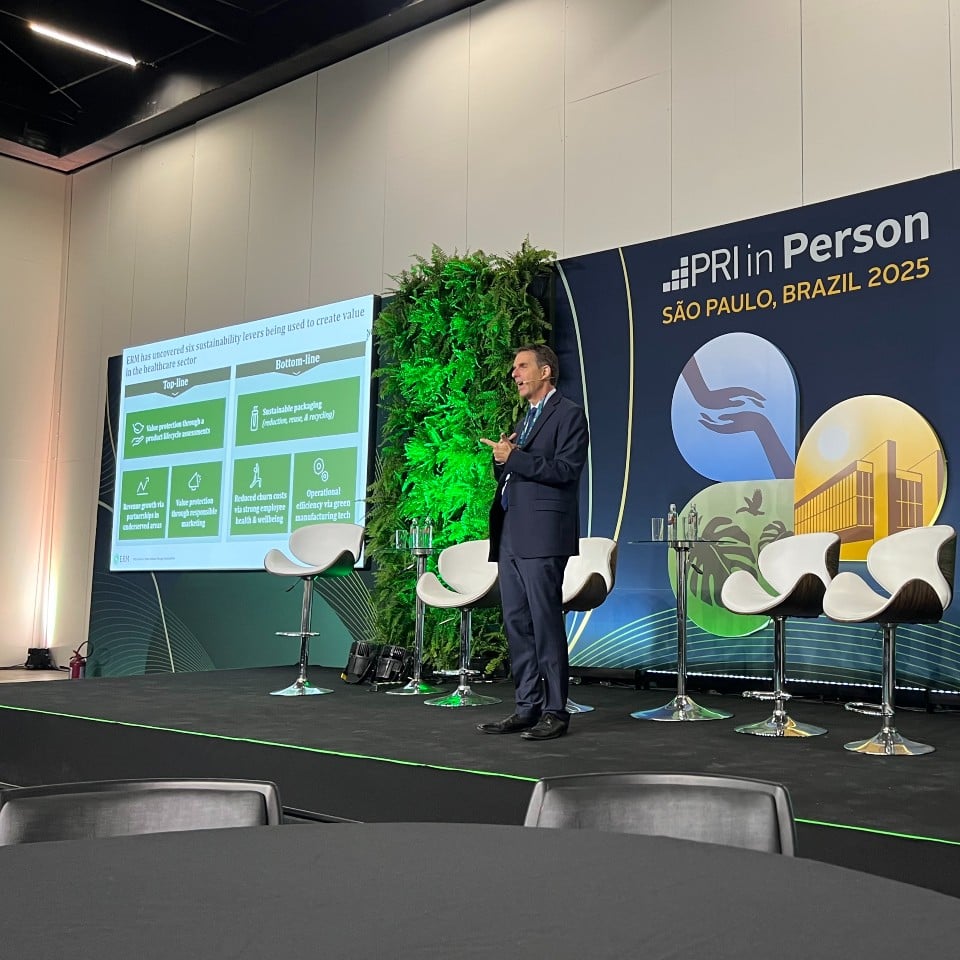
To take one, PRI in Person assembled 1000 finance professionals and stakeholders to discuss global challenges, resilient strategies, and (critical to our thinking) investable opportunities related to climate and nature. ERM’s CEO Tom Reichert took part, leading a session on sustainable value creation in private markets. The session content was based on research that ERM is conducting with UNPRI on how private market investors can quantify tangible financial outcomes from sustainability initiatives early in the investment lifecycle, then use that information to maximize sustainability impact and value.
That commitment – to deliver greater sustainability and financial returns together – was shared by the diverse group of investors, asset managers, and development banks attending the PRI conference. All seemed eager work collectively on the innovative financial instruments needed to mobilize the vast amounts of capital required to implement the Paris Agreement and the goals it has inspired, from signatory nations’ Nationally Determined Contributions (NDCs) to the vast number of voluntary commitments the private sector has made to align with the NDCs. Collectively, ERM’s attendees at PRI felt that the financial community has embraced nature and people issues in addition to climate to a greater degree than ever previously—a mindset delegates also appear to have brought to Belém.
During the first two weeks in Brazil, positivity and purpose have been balanced with recognition that the geopolitical moment is challenging and that sizable implementation and finance gaps remain. Ultimately, the ability to overcome barriers during a polarized and volatile period will be how COP30 is judged regardless of how much Mutirão is on display.
Our pre-COP article laid out four themes we believed had the greatest potential to shape COP30’s outcomes. Here is an initial assessment of how things are going so far.
In no small part thanks to Brazil’s leading by example, collaboration is highly visible and notably shaping the COP. Efforts are multi-layered, multi-party, and multi-sector. A flurry of agreements and initiatives have been announced, many with investment capital behind them, and a substantial number relating as much to nature as climate. Examples include:
Overall, what we notice about collaboration and action at COP30 is that companies, investors, and governments are pushing forward despite uncertainty and developing new narratives rooted in value creation and the reality of the enormous economic transition needed. This feels similar to the ‘grounded optimism’ encountered by the ERM team at Climate Week NYC, where companies and investors expressed their resolve to strategically embed decarbonization and nature preservation while focusing on actions that create clear commercial value. For more on how companies can strike the right balance in communications, neither greenwashing nor greenhushing, check out ‘Winning in the green comms recession’ from our ERM Shelton team.
Something we hoped to see around this COP and that appears to be happening is the development of momentum around ways national climate plans can be used to support corporate transition planning and investments.
For evidence of conviction that there is enough of a floor to support sustainable investment growth, the astonishing global growth of renewable capacity, which continues to grow beyond every forecast, is an inspiring example of how quickly solutions can scale when policy, technology, and capital align. ERM supports renewables development worldwide, for example recently combining our expertise with the Global Wind Energy Council (GWEC) to create a report released during COP on Building the Latin America and the Caribbean Wind Energy Supply Chain for a Clean and Just Energy Transition
Leading into COP, ERM also joined a WBCSD, Natura and Generation Investment Management Integration Summit at Natura’s offices. ERM CEO Tom Reichert’s remarks acknowledged growing recognition that more progress will be made if we deal with climate and nature impacts, risks, and opportunities in an integrated fashion that considers impacts on people, while cautioning that businesses have been slow to embed climate, nature and people issues into core strategy.
There is evidence at COP30 that things are changing and making just transition, community impacts, and indigenous rights core to decarbonization and nature preservation strategies and implementation. Signals that shifts are underway include the ways COP30 President Brazil has made just transition considerations integral to every part of the event. Indigenous people's protests in Belém have further emphasized the importance of the issue. Examples of how momentum is growing include:
Growing awareness of the importance of integrated thinking and governmental efforts to support just transition are empowering private sector action in this arena. Companies present at the COP30 launch of the Business Leaders Guide on the Just Transition just published by ERM and the World Business Council for Sustainable Development (WBCSD) described the strategic importance of considering and addressing the impacts that climate transition plans can have on people—and, in turn, the ways communities can affect companies' ability to deliver their strategies. Another ERM team member in Brazil, Linden Edgell, spoke at the ‘Green Can Never Be Brown’ event during COP week one on the best ways to manage the people and environmental issues inherent to resource development.
A sector where we see just transition awareness growing is mining and metals. The push to increase critical minerals supply is essential to the technologies required for the low-carbon transition. Too often, past critical minerals development has come at considerable cost to communities and people, but awareness of these societal impacts is spreading, and rapid, positive change is underway. For more on the role of just transition in mining, read our report Mission Critical: resilient mines for a modern society.
The technology sector and AI are booming. Data center expansion and related energy demand have climate, nature, and social impacts, while AI may prove critical to solving the most complex planetary challenges. Not surprisingly, digital solutions and AI are on nearly everyone’s lips in Belém. Some of the places and ways people are finding to engage this profound and promising topic include:
While there is so much more to learn, attendees clearly see ways AI might be a gamechanger, like its potential to help manage ever more overloaded grids and increase their efficiency. This is not a random example. With electricity demand expected to increase 40 percent by 2035, partly due to data center expansion, and grid investments highly unlikely to keep pace, it’s the kind of solution COP attendees feel the technology section must help deliver.
We are just one week into this Implementation COP, and so much has happened. ERM’s team will be there through its conclusion. We are excited to see what more the evident spirit of collaboration will produce, and we will be sharing what we learn and our views on what that means in future articles and podcasts.
We expect to hear more in week two about how to address climate impacts and greenhouse gas emissions up and down value chains. There will be more discussion on financing and the scale of economic transition needed. There will certainly be more pressure on governments to act themselves and to provide the policy signals needed to encourage business and citizens to take action too. And there will be eyes on business, hoping and expecting that companies and investors will be vocal about how climate issues are critical to their profitability and resilience today and tomorrow.
Please watch this space for more perspectives from our team, and please share any feedback you have with us, as we’d love to learn where you agree or disagree.
1 / 7
Tom Reichert speaking at PRI in Person in São Paulo on value creation using sustainability in private markets.
2 / 7
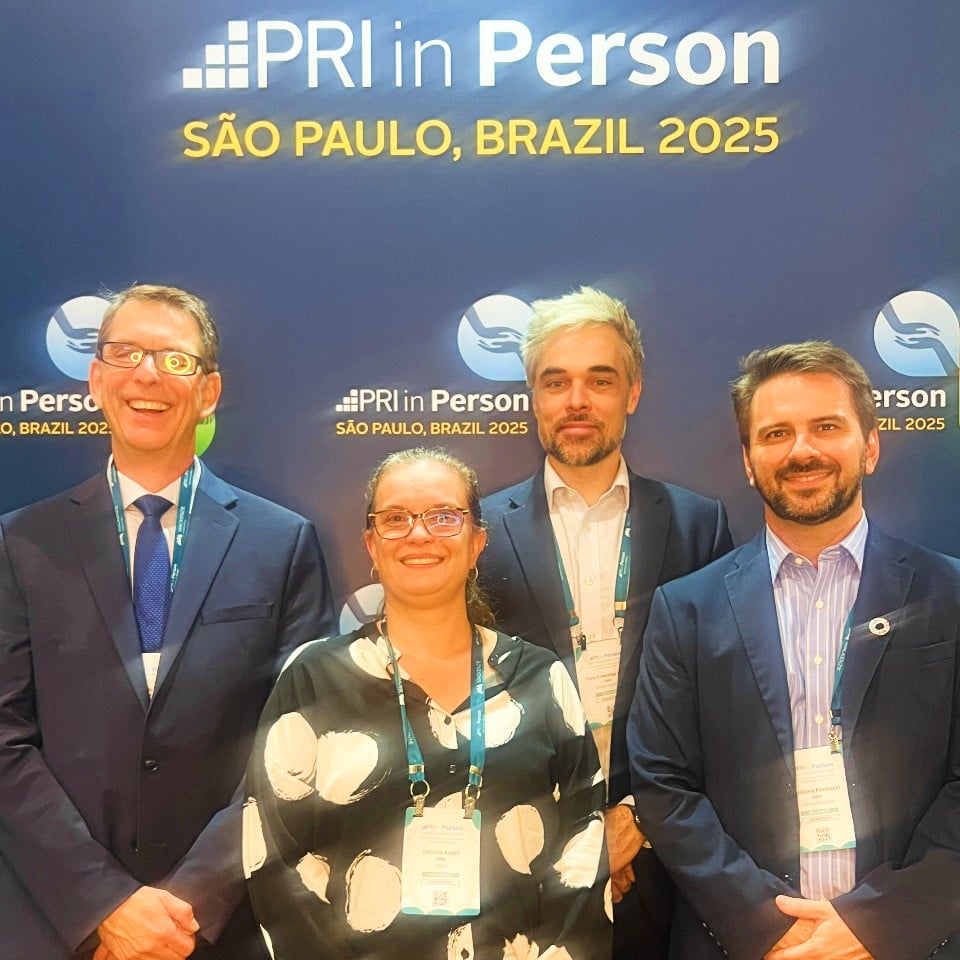
Tom Reichert,Tatiana Assali, Chris Crawshay-Jones and Gustavo Pimentel and PRI in Person São Paulo.
3 / 7
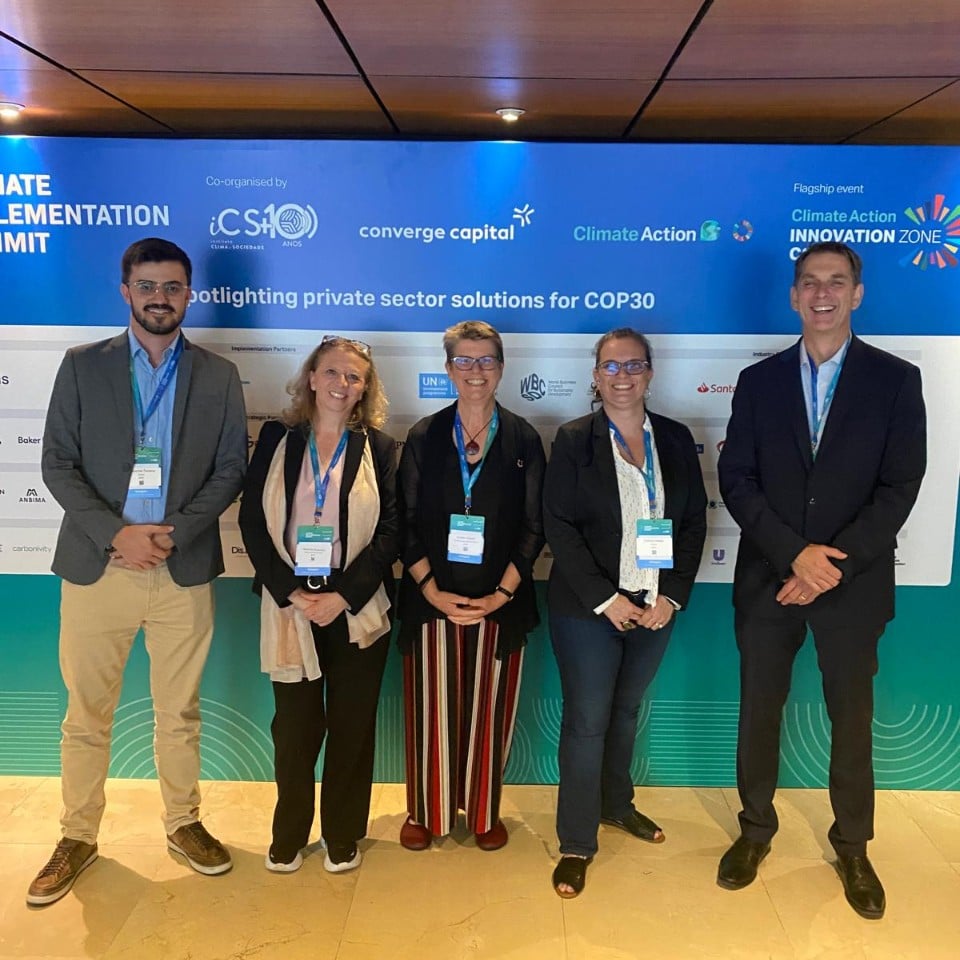
ERM team Guilherme Teixeira, Alexandra Guaqueta, Linden Edgell, Tatiana Assali, Tom Reichert at the Climate Implementation Summit.
4 / 7
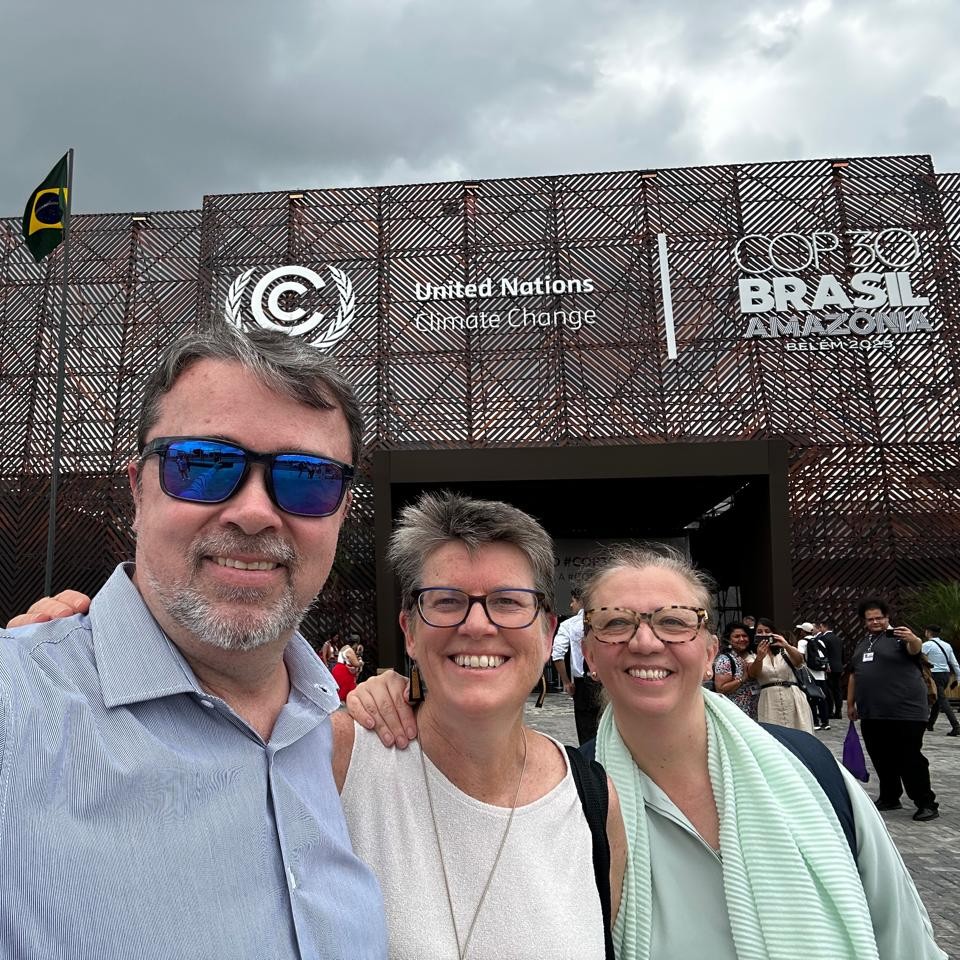
ERM Team, Ricardo Zibas, Linden Edgell and Alexandra Guaqueta arrive at COP30.
5 / 7
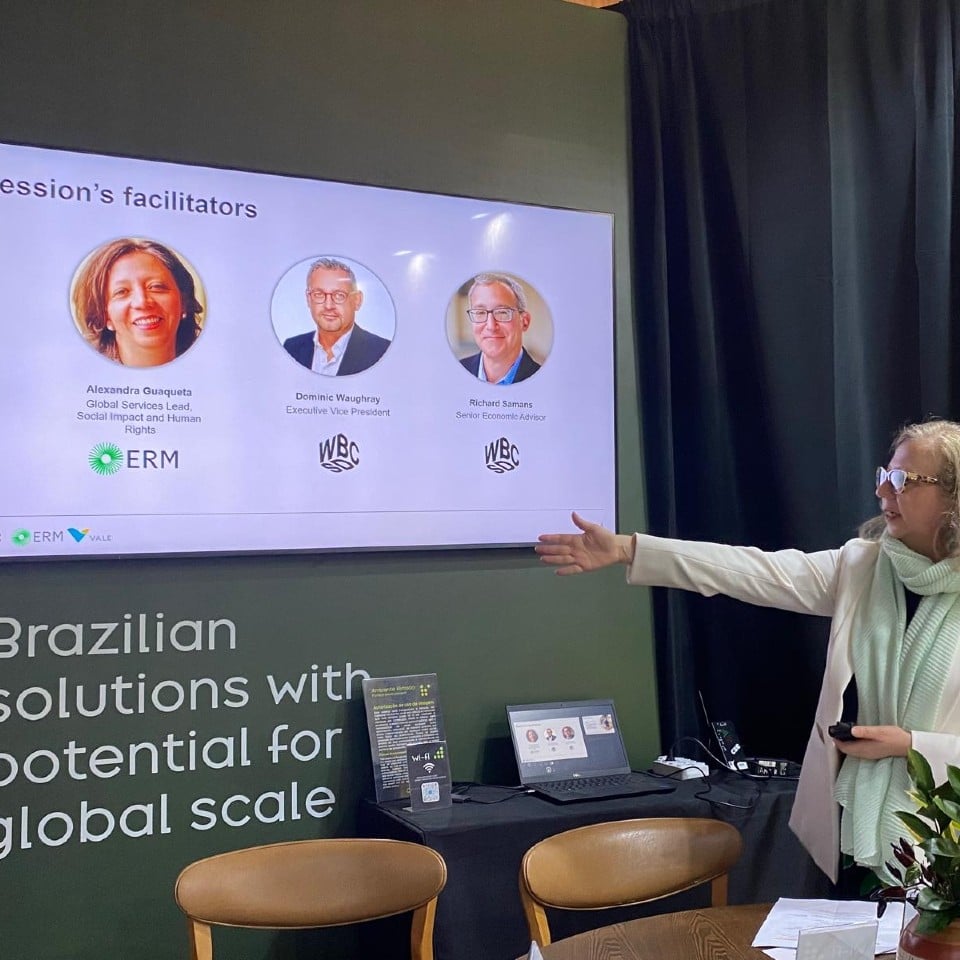
Alexandra Guaqueta speaking at the Just Transition: Why People Matter lunch at COP30 hosted by ERM, Vale and WBCSD.
6 / 7
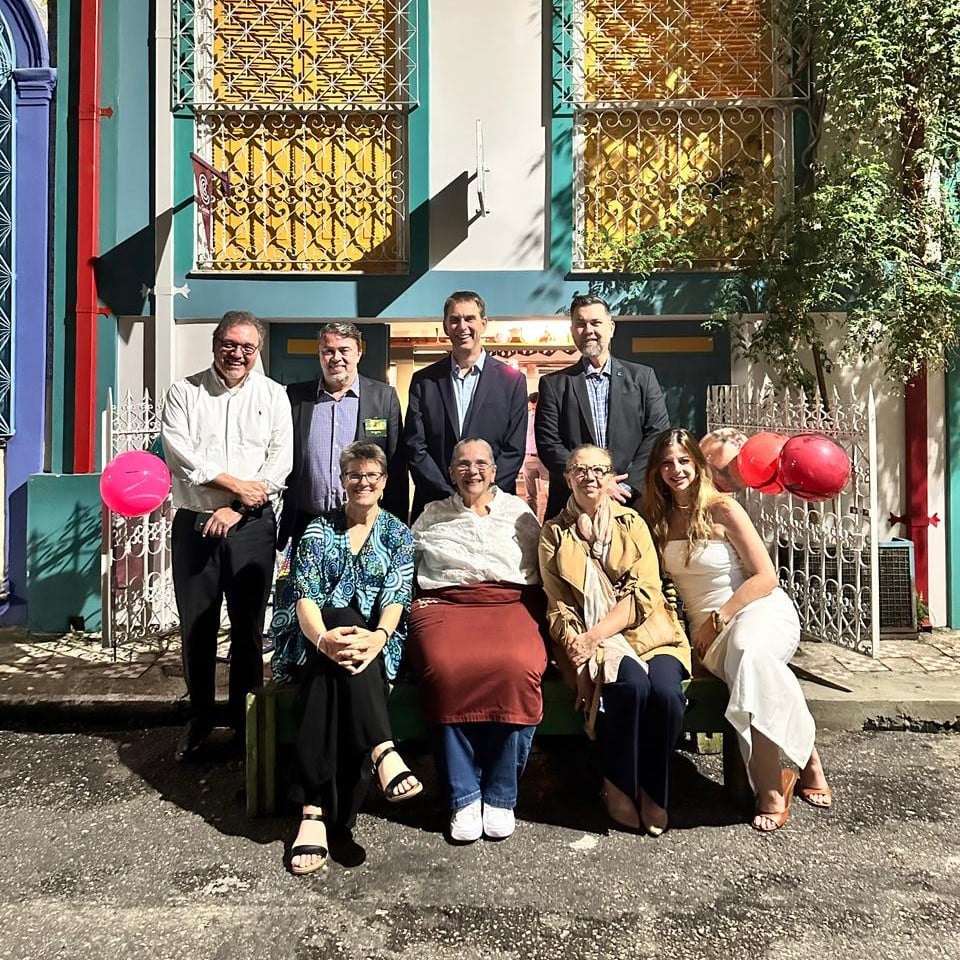
Jorge Soto from Braskem and ERM Team, Ricardo Zibas, Tom Reichert, Paulo Santos, Linden Edgell, Alexandra Guaqueta and Amanda Graue join the chef Oriana Bittar ahead of the ERM client reception at COP30.
7 / 7
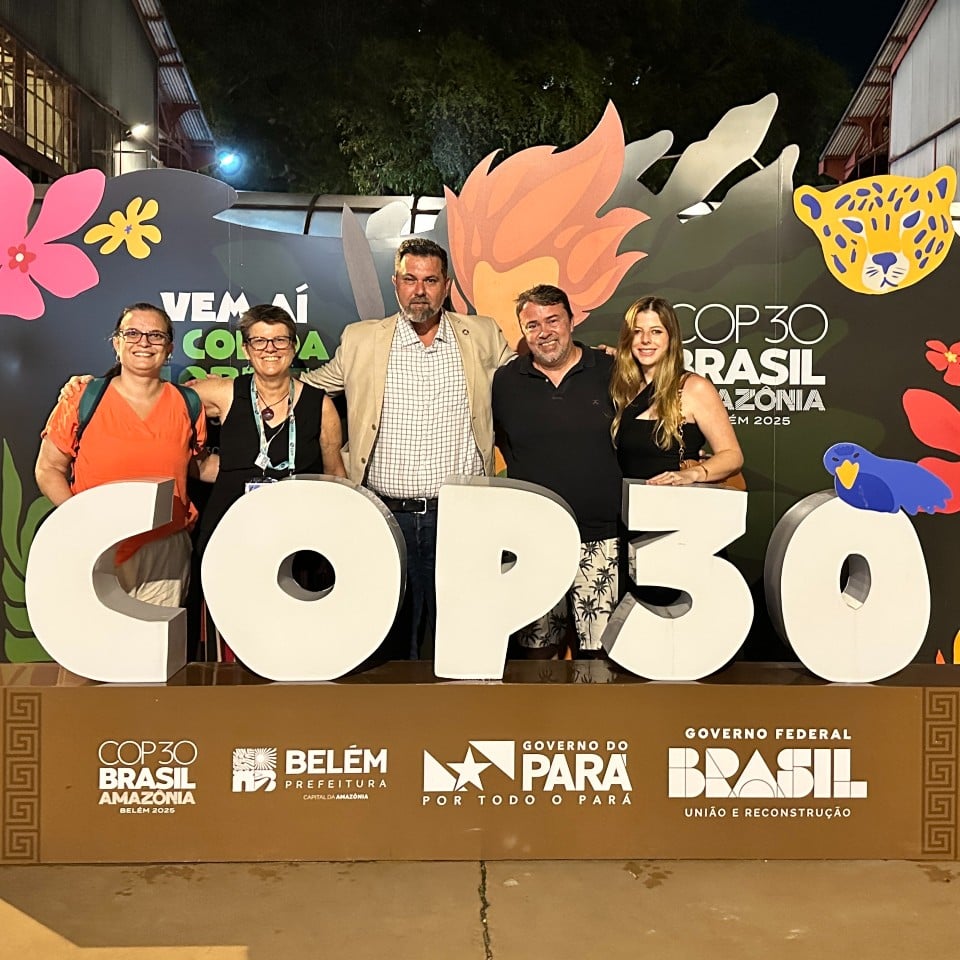
Tatiana Assali, Linden Edgell, Paulo Santos, Ricardo Zibas and Amanda Graue at COP30





The Brazilian hosts are highlighting the importance of ‘Mutirão’ – a collaborative approach to tackling challenges in a complex, uncertain world – to advance this multifaceted agenda.