
Benchmark programs and no obvious case for change
There was no immediate case for change when ERM began its engagement with the Ormen Lange Phase 3 (OLP3) project team. The project involved applying groundbreaking subsea compression technology to extend the field life of the Ormen Lange reservoir off the west coast of Norway, which has been supplying gas to millions of homes and businesses across Europe for almost 20 years.
 Safe execution was a non-negotiable for Project Director Richard Crichton, Health, Safety, Security, Environment, and Quality (HSSEQ) Manager Anna Thorarinsdottir, and the wider project leadership team. The team sponsored and actively participated in a range of measures to deliver their commitment to zero harm across the project's multiple construction and fabrication sites and vessels. With benchmark approaches to safety on this large, complex, high-hazard construction project undertaken adjacent to a fully operational gas plant and with extensive offshore installations and onshore fabrication and testing, the safety metrics were excellent, with no significant or high potential incidents at any project location.
So why did the team commit to an engagement that would challenge their own perceptions of safety culture and their own leadership on the project?
The catalyst for action
Crichton’s participation in an ERM Safety leadership and culture transformation program for Shell UK prompted the commitment. Known for his sincere, vocal commitment to safety, Crichton was struck by the ERM facilitator’s challenge: “It’s really not about how good you are, it’s about the untapped potential that lies within you and the potential of the team. How much better could you be? Imagine what could be possible if you were 10% more effective and more impactful as a leader than you are today.”
Shortly afterward, a tragic incident at a contractor’s facility (unrelated to OLP3), prompted Crichton to reach out to ERM with a clear goal: challenge the status quo on OLP3 and help Shell achieve its potential as safety leaders on our project. ERM and the Project Leadership Team agreed that ERM would spend time in the field with a few members of the OLP3 Project Leadership Team, observing behaviors and conditions on the frontline, and photographing their observations. One-on-one challenge/coaching style engagements would follow, with the leadership team gaining deep insights into the state of the culture and determining which actions, if any, would be required to foster a more robust culture and improved safety performance on the project.
A robust case for change
Applying ERM’s deep observation techniques (‘Observing Differently’) at the Nyhamna Project onshore site and at the main subsea contractor site, ERM and the OLP3 Project Leadership Team uncovered a robust and compelling case for change. Observations and photos shared in a one-day facilitated session produced powerful reactions in the team and created alignment on the real vulnerabilities of the project’s safety culture, and stress points in current approaches to addressing safety on the project.
These engagements also prompted meaningful personal reflection on how effective the team was in addressing safety in their individual roles on the leadership team.
- Am I engaging enough on safety?
- Are my engagements on safety sufficiently impactful?
- Why are the pictures taken at the site presenting a reality that is at odds with my own perceptions of our safety culture?
- Am I spending enough time on the front line?
- When I’m in the field, am I observing work as I should be?
The one-on-one and collective engagements with the team fostered deep determination to take safety culture and performance to the next level, a commitment to stepping up the quality and extent of the team’s interactions on the project, and alignment on a few, substantive, measures to change how people on the frontline would engage in the work.
Practical actions to deliver change
The OLP3 Leadership Team was determined to share the case for change with the broader project team, including senior leaders from all key contractors, to secure their active engagement in driving change. Over 100 key personnel working on the project, including leaders from all key contractors, participated in a one-day session collaboratively designed by HSSEQ Manager Thoraninsdottir and the ERM team.
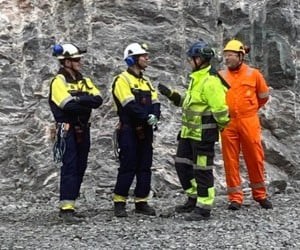 ERM also delivered a series of two-day sessions on ’Observing Differently‘ and ’Engaging for Impact’ with more than 100 project personnel and contractor leaders, which included a full day of coaching sessions in the field. The training provided new insights and practical skills to enhance the quality of their decision making as leaders and equipped them to deliver immediate, sustained cultural changes on the frontline. Follow-up engagements with the Project Leadership Team helped bring sustained challenge to the team through the remainder of the project.
The graphic below summarizes the process the ERM team deployed to support the OLP3 leadership team on the project.
The engagements on safety leadership with ERM helped us operationalize our HSSEQ vision: managing the risks, building relationships and trust. It integrated perfectly with the pillars of our safety program and made a serious impact on the leaders who participated. It brought us closer
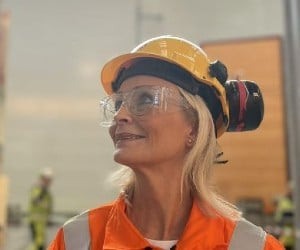
together as a team. People fell in love with the philosophy: 'if you are a leader, you need to know what’s happening on the frontline and you need to engage in an impactful manner’.
We continued to practice the methodology after ERM left, 100 became 500. We actually lost count of the number of people who were engaged in the program and we had a lot of fun doing it! It had such a positive ripple effect that people started to use the methodology with other operators without prompting. It grew organically.”
- Anna Thorarinsdottir, HSSEQ Manager on the OLP3 project
Our impact
The Ormen Lange Phase 3 Project was delivered on budget and ahead of schedule. The safety leadership and culture engagements ERM facilitated had profound and lasting impacts on individual leaders and on the project’s overall approaches to safety, people leadership, and performance. In their own words:
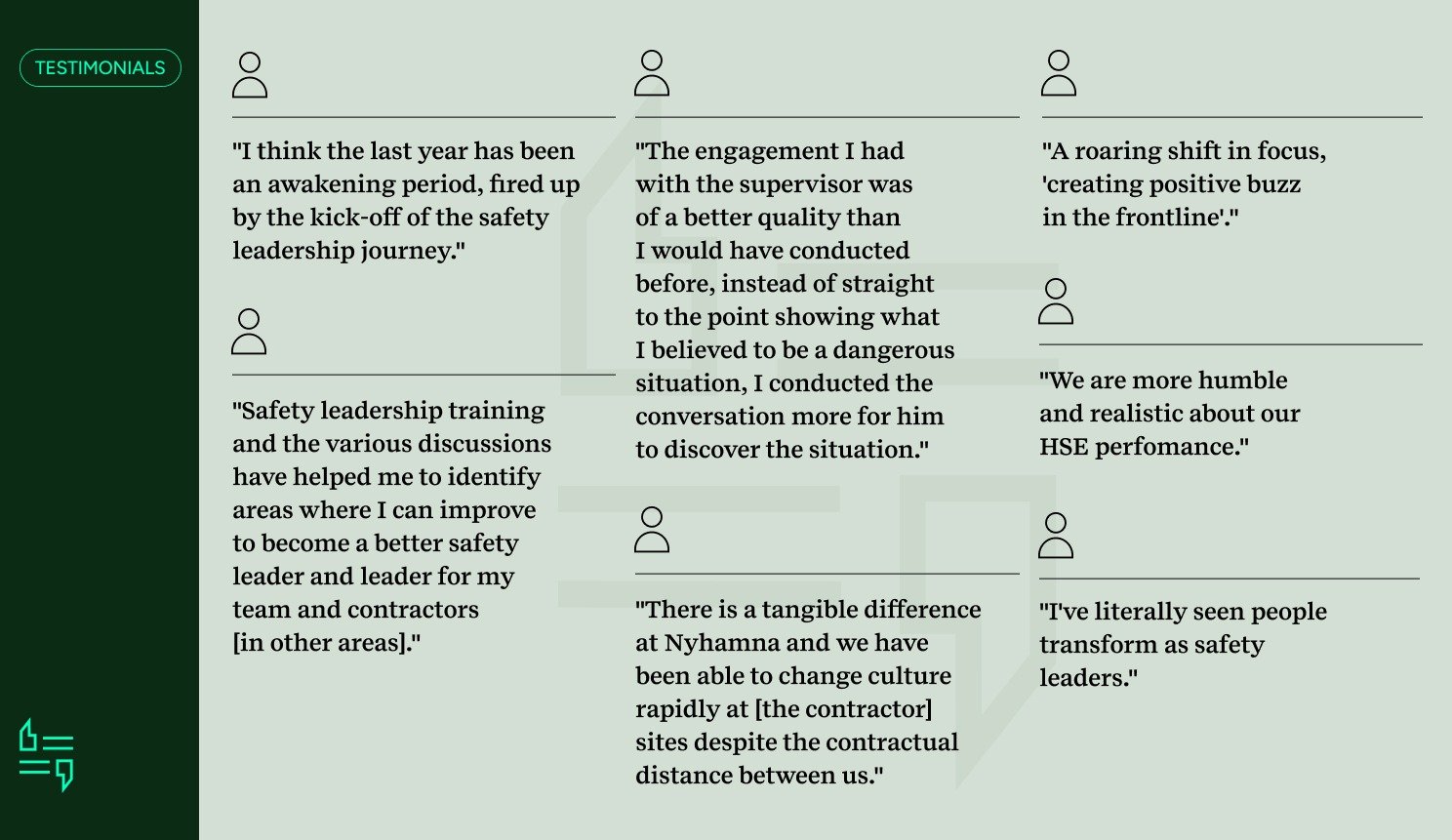
Several factors were critical to the successful outcomes achieved through ERM’s work with the project team:
1. Recognizing that going from good to great and bringing meaningful challenges to the team when performance appears to be on track, requires visionary, engaged leadership, especially in a time-constrained environment.
2. Acknowledging that leaders on complex projects bring immense capability to the job and most, if not all, care deeply about the safety of their people. However, improvement requires looking beyond individual commitment, current capability, and even achievement. It requires individuals, and by extension the team as a whole, to embrace the possibility of personal and collective growth and the need to change how they think and act to deliver on the untapped potential. There is no improvement without change!
3. Cultivating and sustaining a real ‘One Team’ culture with key contractors is critical. “Without great relationships and aligned safety ambitions, we would not have been able to roll out ‘Observing and Engaging Differently’ to so many people across all the involved sites and contractors.” - HSSEQ Manager, Anna Thorarinsdottir
4. Focusing on frontline conditions and the team’s quality of engagement with their work environment is imperative.
5. Collaborating between a fully engaged HSSEQ lead, their team, and ERM at every step is essential to shape the program and to ensuring it addresses the very specific needs of the organization as they evolve over time.
6. Directly and continually engaging the project director is key. There is no substitute for their voice in the pursuit of higher levels of capability and achievement.