

 View all
As sustainability reporting becomes more dataintensive, regulated, and scrutinized, one theme is becoming impossible to ignore: there is no sustainability without trusted digital data.
The convergence of information security and ESG is accelerating and most organizations are still at the very beginning of this journey.
During our recent webinar we covered how global cybersecurity regulations, ESG disclosure expectations, and stakeholder pressure are reshaping business resilience. At the center of it all sits ISO 27001, an increasingly critical enabler of sustainable operations, trustworthy reporting, and integrated governance. Download the webinar recording here
1. Global shifts: Cybersecurity and sustainability expectations are tightening
Across regions, governments are rapidly strengthening both cybersecurity and sustainability disclosure rules. This dual regulatory momentum is forcing organizations to rethink how they manage data, risk, governance, and digital operations. A global snapshot of key cyber sustainability disclosure legislations outlines some examples below:
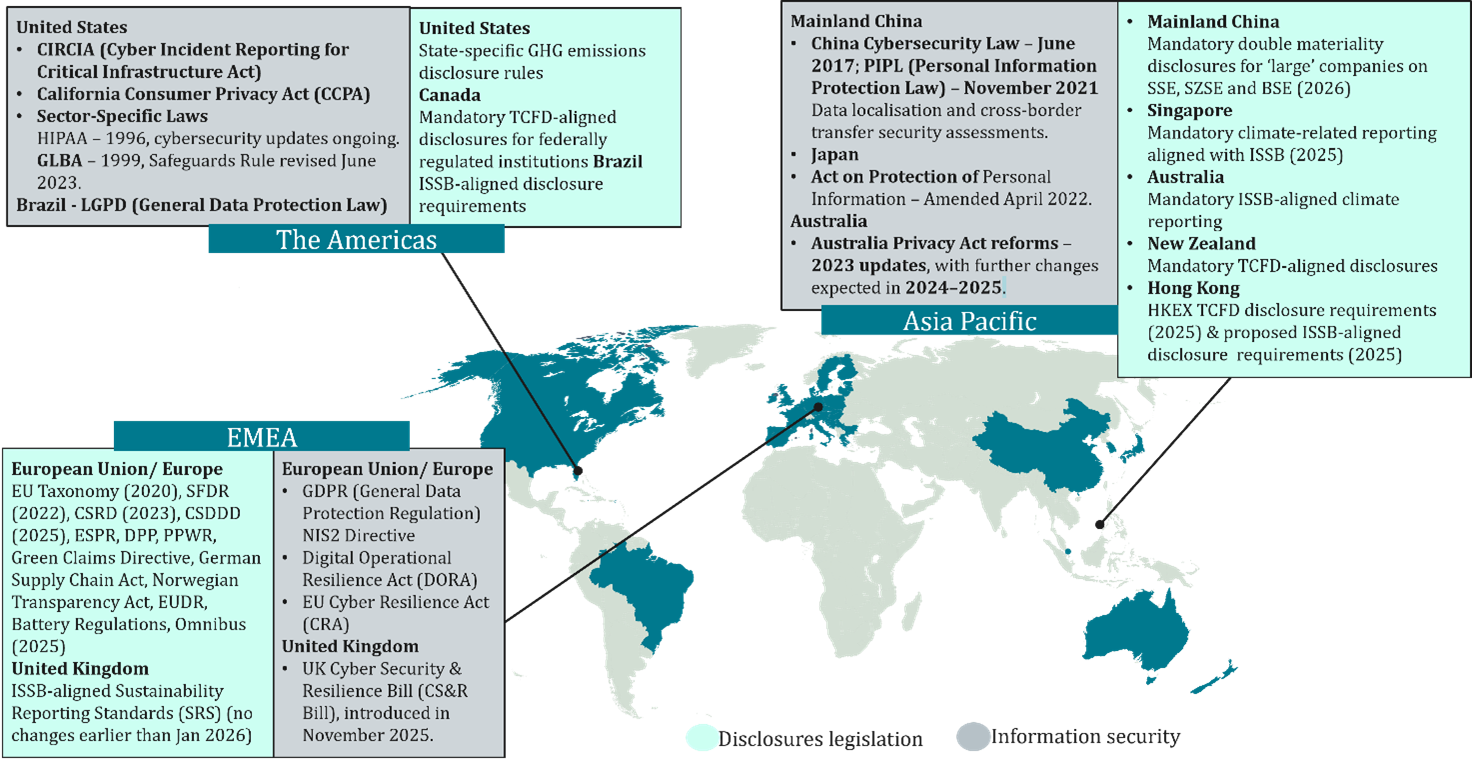
Cybersecurity rules are expanding, from GDPR and NIS2 in Europe, to CCPA/CPRA and CIRCIA in the U.S., to PIPL in China and new resilience regulations in the UK.
Sustainability regulations are growing, with CSRD, emerging ISSB‑aligned frameworks, due‑diligence requirements, and climate‑related disclosures now mandatory across multiple markets.
Some country jurisdictional level examples include:
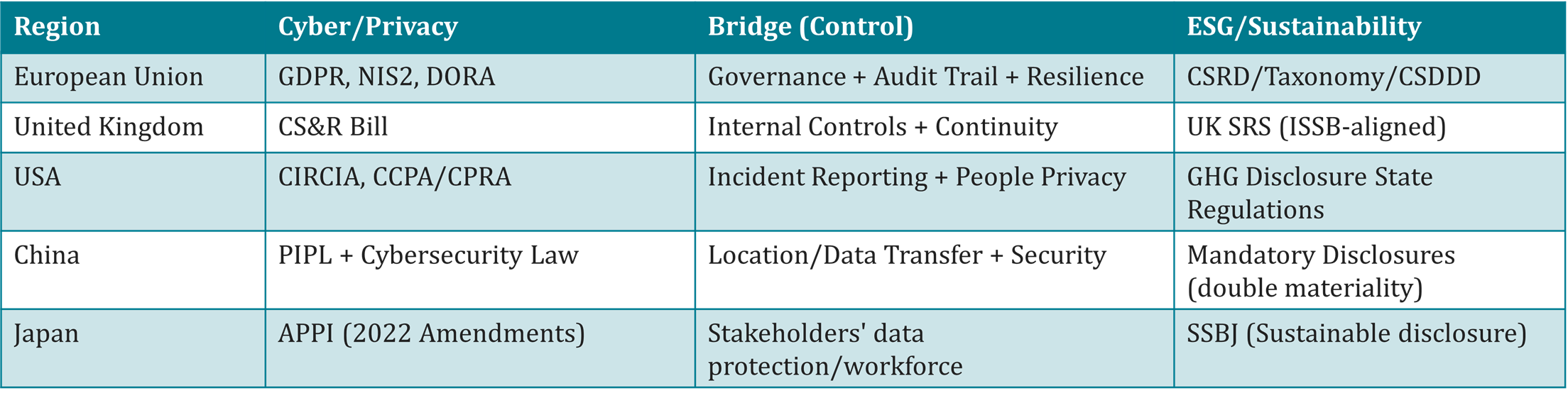
Together, they send a clear message: Secure, high‑integrity data is a foundational requirement for ESG transparency and digital trust.
2. Where cyber and ESG converge
There is an increasingly visible connection between ESG outcomes and information security maturity:
- Environmental reporting depends on data integrity:
Emissions inventories, climate risks, and supply‑chain disclosures require accurate, protected data supported by auditable trails. - Social commitments rely on secure workforce and stakeholder data:
Human‑rights due diligence, labor disclosures, and community engagement all rely on privacy and responsible data handling. - Governance now includes cyber resilience:
Boards are expected to demonstrate oversight, internal controls, and digital risk management as part of environmental leadership.
Put simply: Without strong cybersecurity and governance, ESG is just a narrative.
Find our more on how third party assurance can help your verification approach with robust ESG reporting here.
3. Why ISO 27001 adoption is accelerating
The data shows ISO 27001 certification is growing faster than almost any other ISO standard. Its appeal lies in its ability to:
- Strengthen business continuity and resilience
- Support compliance with global privacy and cyber laws
- Protect brand trust by reducing breach‑related reputational risk
- Integrate with other standards such as ISO 14001, 45001, 22301, and 9001
- Enhance internal controls and reporting accuracy
- Build systematic, repeatable processes that underpin assurance
For sustainability leaders, ISO 27001 provides the governance, structure, and security backbone needed to support credible ESG disclosures and operational resilience. Find our more about ISO 27001 certification here.
4. ESG data: a new target for cyber attackers
This also presents a growing risk: ESG data itself is now a valuable attack target.
Attackers increasingly exploit:
- Manipulation of emissions or sustainability performance data
- Theft of supply chain, audit, or human‑rights records
- Destruction of sustainability audit trails
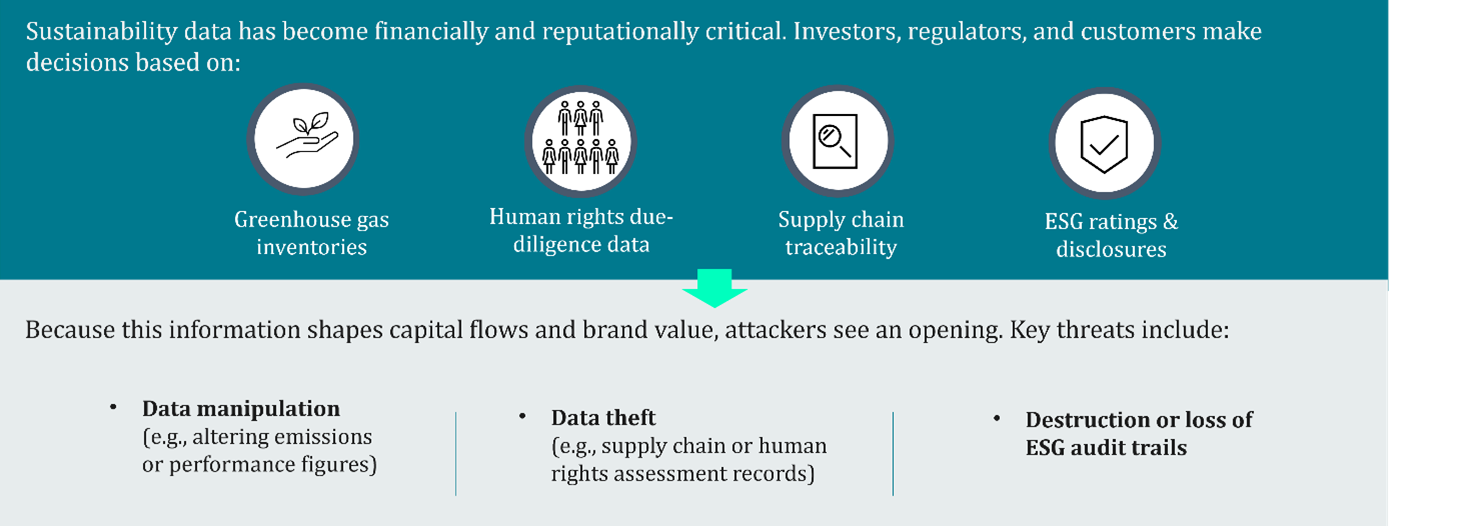
Because ESG data influences capital flows, brand value, procurement decisions, and leadership credibility, the impact of a breach is no longer just technical, it is reputational, financial, and strategic.
A single compromised dataset can undermine years of sustainability progress, it damages more than IT systems, it damages credibility, the basis of ESG reporting, and rebuilding trust is slow and expensive.
5. Integration: ISO 27001 as part of a unified management system
Many organizations still treat cybersecurity, environment, quality, ESG, and business continuity as separate programs. ISO’s High‑Level Structure (HLS) enables a different approach: Integrated Management Systems (IMS) and brings these key topics together.
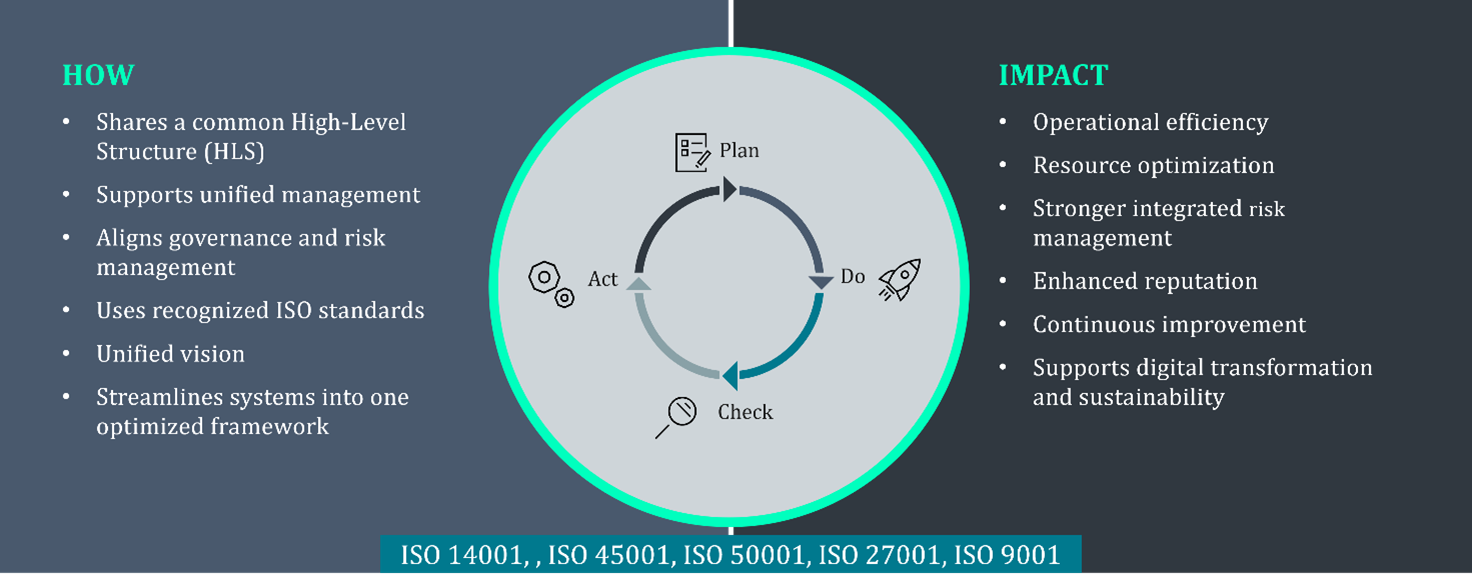
By aligning shared governance, planning cycles, audits, and risk frameworks, businesses can:
- Reduce duplication and inefficiencies
- Improve cross‑functional resilience
- Strengthen reporting integrity
- Consolidate controls and streamline processes
- Embed sustainability into everyday decision‑making
ISO 27001 can become a connector between sustainability, digital trust, and organizational governance. Read more about Integrated management systems here.
6. People remain the biggest vulnerability and the biggest opportunity
Up to 95% of breaches stem from human factors, not technology.
With ESG reporting still heavily manual in many organizations, spreadsheets, emails, offline workflows, the risk of errors, manipulation, and accidental disclosure is amplified.
Building digital literacy and ESG fluency across the workforce is therefore essential.
Three key areas to consider include competence, awareness and behaviors across a range of topics including information security principles, controls, risk management and data protection as 4 fundamental musts.
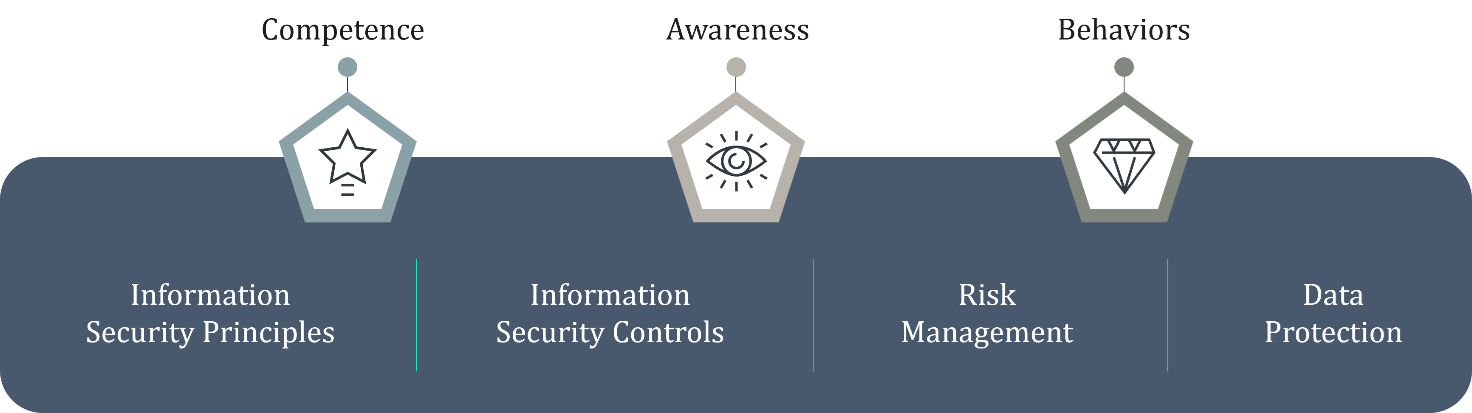
Key people focus areas should include:
- Strengthening awareness and behavior
- Improving secure handling of sustainability data
- Reducing human‑error surfaces in collaboration tools
- Enabling teams to understand the role of security in ESG
- Empowering ISO 27001 auditors as value creators, not just compliance checkers
A culture of security, integrity, and continuous improvement is key to sustaining trust. Learn more about ISO training courses here and broader sustainability training here.
7. What this means for sustainability and cyber professionals
For sustainability teams: cybersecurity enables credible disclosures, protects ESG infrastructure, and maintains operational continuity.
For information security teams: sustainability brings new data types, new regulations, and new expectations around transparency, operational resilience, and responsible digital operations.
For both: Digital trust is now a shared mandate.
8. Conclusion: Trusted digital data is now the foundation of sustainable business
The convergence of sustainability and cybersecurity is not a trend, it is a structural shift in how organizations manage risk, transparency, and resilience.
As ESG becomes more regulated and data‑driven, ISO 27001 provides a proven framework to ensure that sustainability claims are backed by secure, reliable, and auditable information.
The market is early in its convergence journey. Most organizations have some form of information security in place, but from our recent webinar poll. only about one in four are actively integrating InfoSec and ESG. The biggest gap is making the connection explicit in governance, controls, assurance, and reporting.
There is no sustainable business without trusted digital data.
Contact us to find out more and explore how you are accelerate the integration of your information security and sustainability journey.