
It's 6:37pm. You caught three green lights, buying you enough time to grab some milk. You have texts coming in nonstop, five emails you have to answer tonight, and no one else to make dinner for the family. The store is packed.
You snag a cart, push and … draaaaagggg.
It’s that cart with the wobbly wheel. Whatever. You’re in a hurry, so you head to the back of the store. This shouldn't take long. It’s just milk, right?
Except, now you’re staring at oat, almond, lactose-free, and dairy milk in a range of cartons and plastic jugs. Do you really have to read every label to make sure you’re not feeding your family pure sugar or causing global catastrophe? Why does this have to be so hard?
You just wanted to buy some f$%#ing milk
Welcome to Modern Shopping.
Whether you’re in the grocery aisle or browsing your favorite clothing store, the shelf is crowded with promises — each one speaking to your values, your health and the future of the planet. What used to be a quick decision now feels like a research project.
Contrary to what our cultural landscape suggests, consumers care deeply about environmental and social issues. What they’re struggling with isn’t motivation — it’s the shopping experience itself. The marketplace is filled with competing sustainability claims and confusing signals, turning everyday purchases into complicated decisions.
In other words, the friction shoppers feel isn’t coming from division in values.
It’s coming from choosing what makes it off the shelves and into the cart.
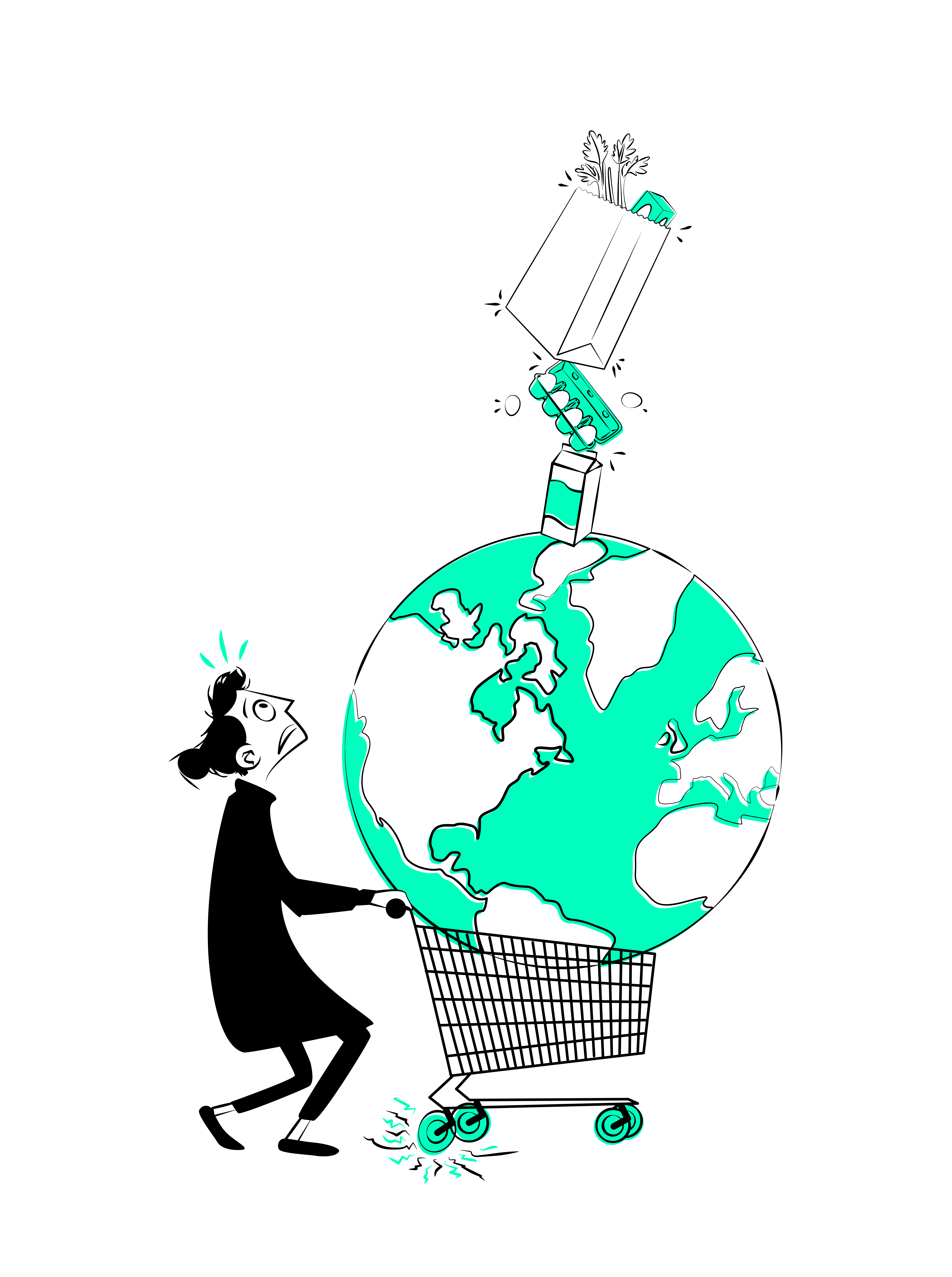
And somewhere along the way, the wheel started to wobble.
Milk, eggs, a livable world: We're all here for the same things
That moment at the milk cooler — the label reading, the second-guessing, the quiet panic about whether you’re making the “right” choice — might make it seem like consumers are indecisive about sustainability.
But the data tells a different story.
Across demographics and ideologies, Americans are surprisingly aligned on a few core things.
1. They want greener products.
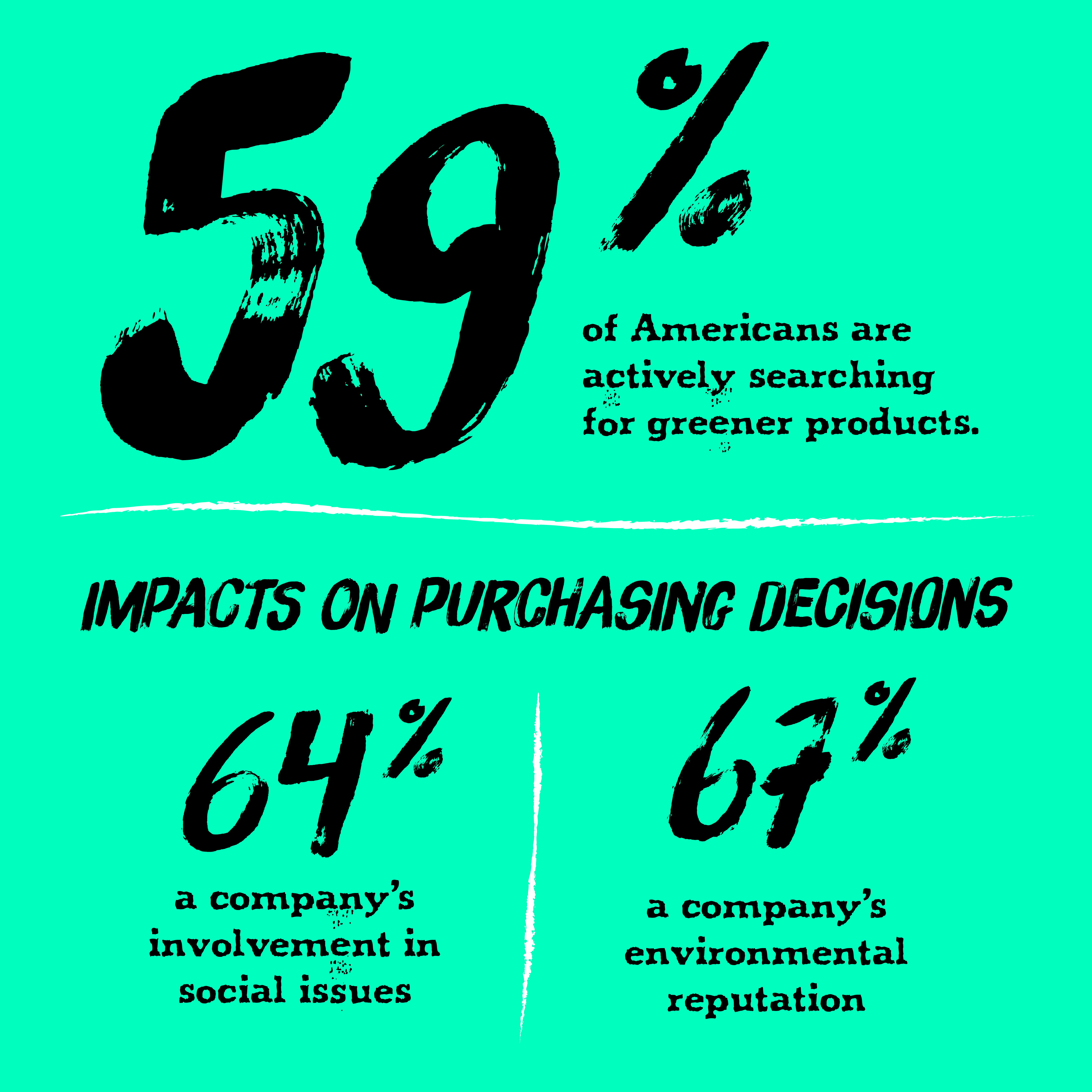
59% of Americans are actively searching for greener products. Environmental attributes are no longer a specialty filter — they are considered at the shelf, and influence whether a product makes it into the cart.
Retailers and brands are seeing the impact. Amazon’s Climate Pledge Friendly Program makes sustainability criteria visible to shoppers and helps them compare options. The results are tangible: Amazon found that products saw a 12% sales lift in the first year they joined the program. It's driving brand-switching behavior and consumer loyalty.
It’s no fluke, folks — it’s value creation.
2. They want companies to reflect social and environmental values.
64% of consumers say a company’s involvement in social issues impacts their purchasing decisions. 67% of Americans say that a company’s environmental reputation has an impact on their purchasing decisions.
That’s nearly two-thirds of consumers who are looking to hear from companies on how they are supporting communities, treating people and protecting the environment.
What does that mean?
These numbers don’t describe a fringe audience. They describe a mainstream consumer who wants environmental responsibility to show up in the marketplace.
The aisle is full, but what are the options?
Alignment shows up in another unexpected way: We’ve been led to believe that consumers are unsure if climate change is real, and that there is mass skepticism around humans as the cause.
But again, the data says otherwise.
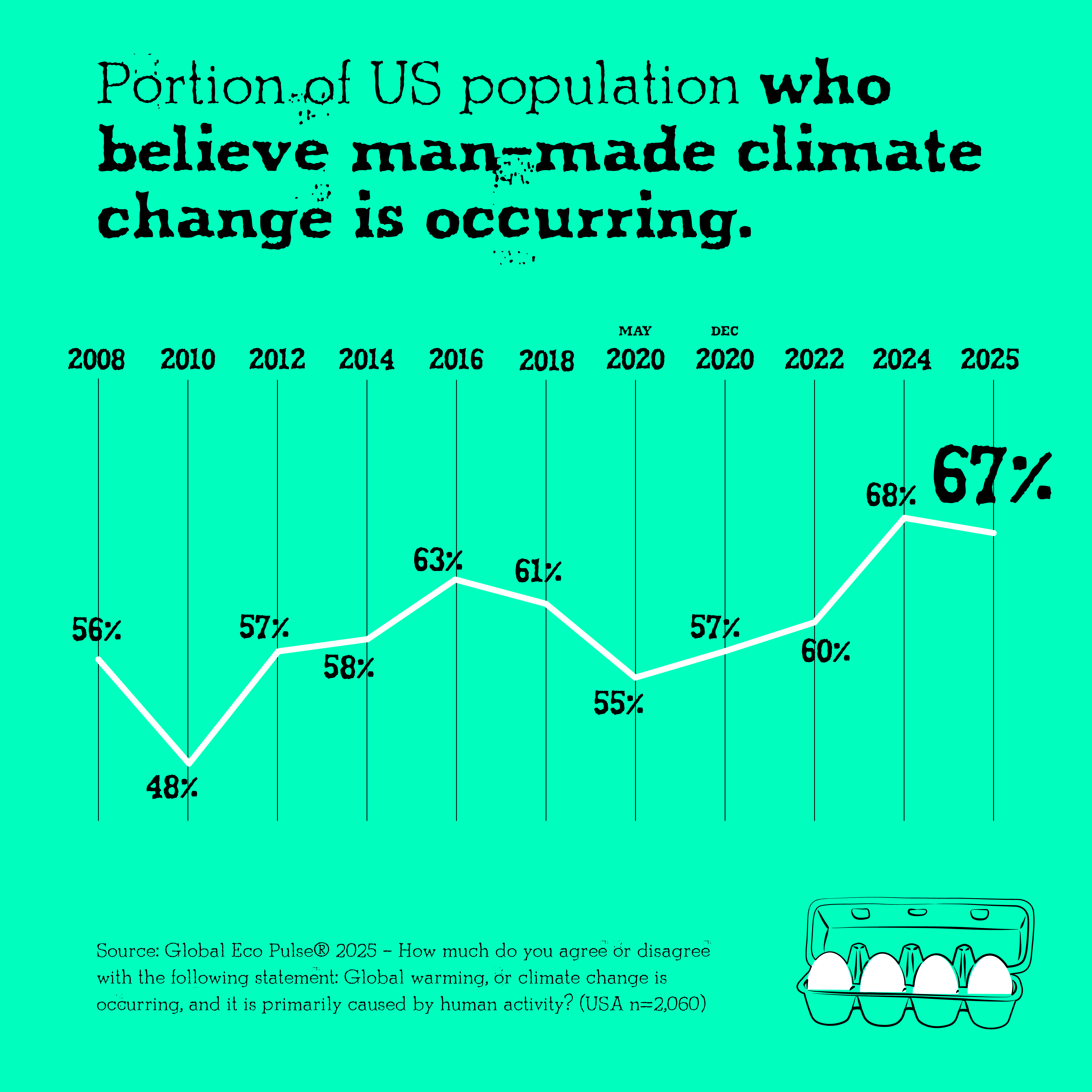
Since 2008, belief that humans are causing climate change has risen from 56% to 67%. Again, that’s two-thirds of Americans. And it’s rising, not dipping, like we might expect during a time when there is conflict over collective environmental action.
And it’s not just about believing that climate change exists. The majority of us are worried about it! Today, 58% of Americans say climate change is a current concern — up 16 percentage points since 2020. Waste, extreme weather and energy rank among the highest areas of concern, with carbon emissions continuing to trend upward.
This means consumers are moving out of the awareness stage. All that hard work communicating about sustainability is paying off, resetting a baseline for environmental concern. And that’s big news for companies. It means consumers are now evaluating their purchases against what they believe and care about. And they’re wondering: What are companies doing about it?
Clean-up on Aisle Planet
66% of Americans say companies are “strongly or very strongly responsible” for making changes that impact the environment. 72% believe companies should take responsibility for what happens to their products at the end of their life. Today’s consumers don’t see environmental responsibility as optional or aspirational — they see it as embedded in how businesses should operate.
But consumers aren’t asking companies to solve climate change or every environmental issue alone — they hold themselves nearly as responsible.
Does the cart that holds my values HAVE to have a wobbly wheel?
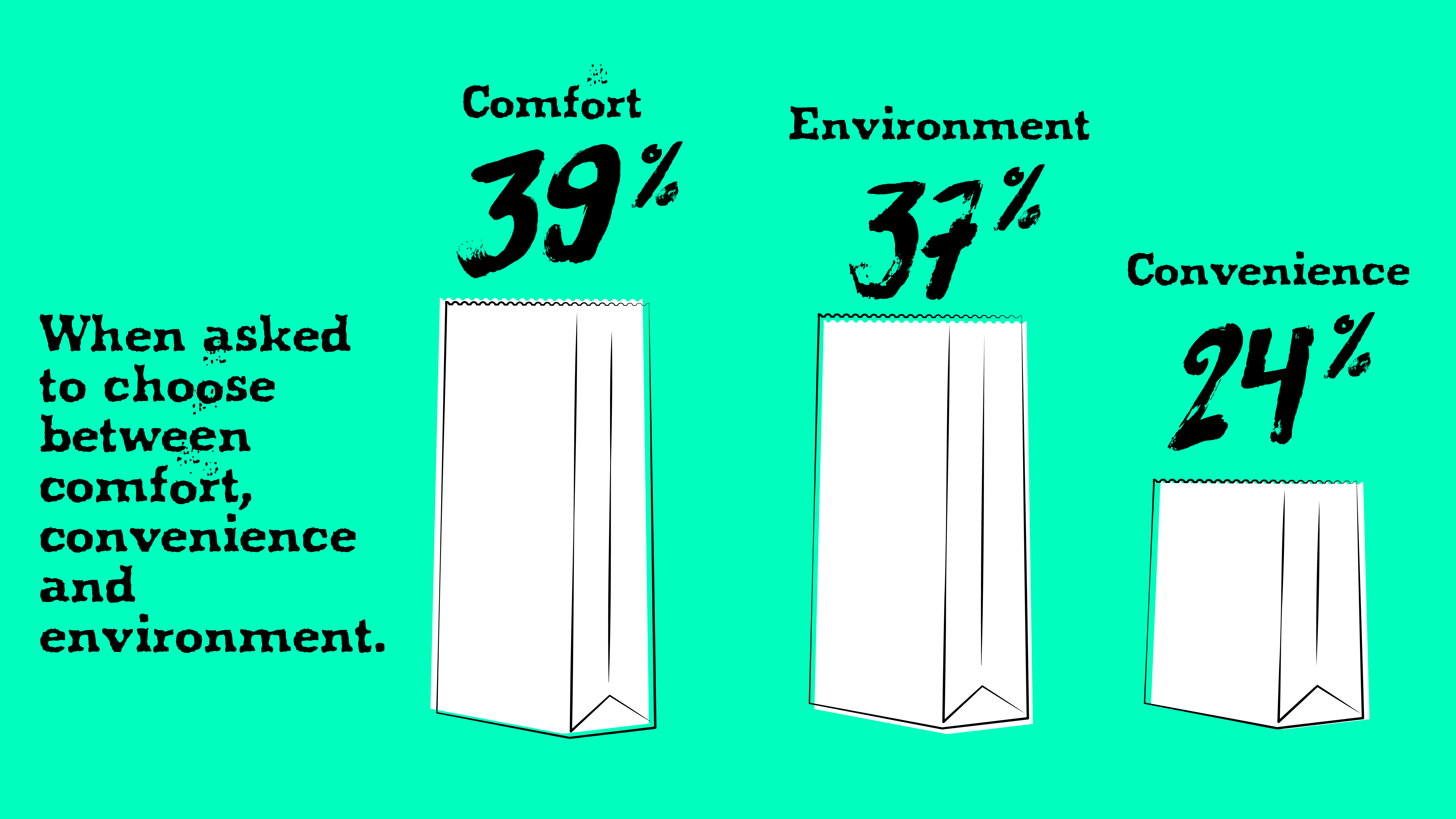
The numbers show that consumers want to make better choices. But the environment isn’t the only thing that consumers care about. Consumers are balancing a grocery list of needs with environmental considerations: price, quality, convenience, comfort and more.
As we can see, fewer consumers report choosing convenience. But in practice, consumers tend towards it. Respondents seem hesitant to admit that they deprioritize the environment when choosing products, likely because it doesn’t align with their self-image or how they want others to see them (44% of respondents say that buying or using eco-friendly products is an important part of their image.
That spells GUILT. It means shopping trips feel like a decision-making exercise in sacrifice, as consumers weigh global issues against immediate personal needs or wants.
And sustainability isn’t easy or convenient to assess. Consumers face obstacles at every turn:
- Sustainability claims that are vague or inconsistent
- Environmental benefits that are difficult to compare
- Messaging that feels aspirational but disconnected from outcomes or the product (see one of our last reports for more details)
That’s where the friction happens: in the desire to make better choices, but the uncertainty in how products or services are taking sustainability into account. It’s caused by values being ignored. It’s caused by having to choose between the things they know, the things they care about, and the things they need, and making tradeoffs on every purchase. It’s caused by the inconvenience of having to recognize certifications, understand data and interpret vague claims like “eco-friendly” and “good for the planet.”
Consumers are aligned on wanting to buy more sustainable products. But they are fairly split on what to prioritize. That means they don’t want to make tradeoffs. This value alignment without enablement is building friction into the marketplace.

A tradeoff at every checkout
Here’s where friction sharpens.
84% of consumers agree that companies wouldn’t do anything to protect the environment unless they were forced by law.
This gap — between expectation and lived experience in the aisles — is where frustration grows. If consumers think businesses are skirting their responsibilities, it means they feel like they are sacrificing their values at checkout.
And that builds resentment, escalates anxiety, erodes trust and makes every shopping experience a cart with a wobbly wheel.
How did this trust erosion happen? And what brands can do about it? We’ll tell you all about it in our next chapter on Trust.